[ad_1]
Pope Leo XIV has issued his first official piece of religious guidance to billions of Catholics. And it’s all about AI.
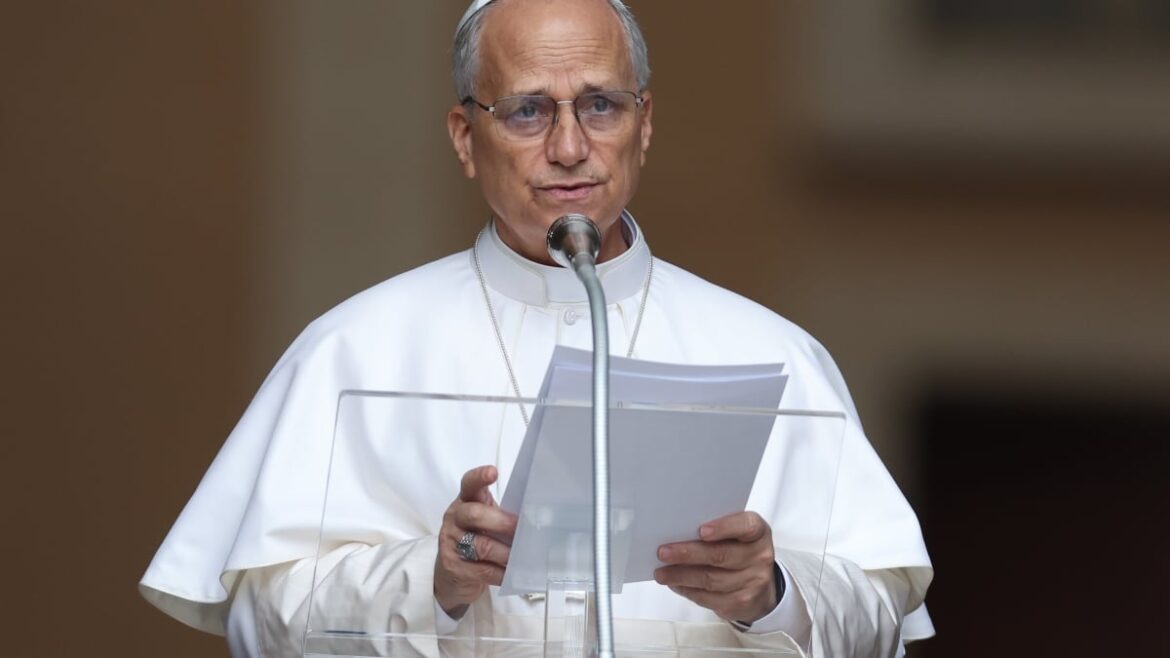
It came in the form of a 42,300-word papal encyclical titled “Magnifica Humanitas” (“Magnificent Humanity”). Encyclicals aren’t papal law, exactly, but act as authoritative guidance on social and moral issues for members of the Catholic Church. This one, the first since Leo was chosen, came with even more pomp and circumstance than usual, with the leader himself attending its presentation alongside Anthropic founder Chris Olah.
Mashable 101 Fan Fave: Vote for your favorite creator today!
The Pope has spoken previously about regulating AI, imploring industry leaders to more carefully consider the ethical implications of AI in their work. Last May, when explaining why he chose the name Leo, the pope specifically cited AI as one of his primary reasons.
“There are different reasons for this, but mainly because Pope Leo XIII in his historic Encyclical Rerum Novarum addressed the social question in the context of the first great industrial revolution. In our own day, the Church offers to everyone the treasury of her social teaching in response to another industrial revolution and to developments in the field of artificial intelligence that pose new challenges for the defence of human dignity, justice and labour.”
The encyclical goes further, diving into AI’s impact on jobs, education, and child safety in a message to leaders around the world.
“We need moral voices that the incentives cannot bend,” Olah said. “Today is just the beginning — the start of a long collaboration between those of us who are building this and those who can see what we, from the inside, cannot.”
Here are the main takeaways from the Holy See:
Mashable Light Speed
AI is a threat to workers
The Catholic Church is worried about AI taking over jobs, too. Tying “Magnifica Humanitas” to other labor-related encyclicals throughout the Church’s history, Pope Leo calls the automation of jobs a threat to workers, citing widespread deskilling and greater labor surveillance with AI systems in place.
“Today, the convergence of automation, robotics and AI is rapidly transforming the very structure of work. It is said that this will bring great improvements for everyone. In reality, however, the ‘new ways’ of working are not necessarily better.”
Don’t believe the AI hype
The leader warned that current AI hype is akin to a modern Tower of Babel, comparing the pursuit of advanced technology to the biblical story of a group of humans trying to reach heaven. He called on leaders to temper their ambition and recenter humanity.
He also joined a growing number of child safety advocates and regulators who want to address screen time and its effect on children: “Psychological and psychiatric literature has documented with growing insistence how early and unsupervised exposure to digital devices and social media can negatively impact sleep, attention span, control of emotions and relationships, especially during the most vulnerable stages of life, at times with tragic consequences.”
In addition, Leo called out AI’s role in exacerbating misinformation and devaluing critical thinking, especially in schools, saying the technology has a dehumanizing force in the classroom.
Big Tech has created a “new form of slavery”
While simultaneously issuing the first formal condemnation of the transatlantic slave trade, Pope Leo called exploitative tech manufacturing processes and global AI training a “new form of slavery.”
“In some regions of the world, children and adolescents work in dangerous conditions, crushing the materials from which rare earth elements are extracted…The bodies of these people are scarred, injured and worn down so that computational flow may continue uninterruptedly,” he said. “This reality deeply challenges the moral conscience of our time.”
The Pope also connected the rise of artificial intelligence to ongoing global warfare, calling out private incentives and warning against entrusting AI systems with “lethal decisions.” He called for placing “the most rigorous ethical constraints” on weapons developed using AI.
“A subtle temptation may emerge, namely the thought that the problems are too big and we are too small, and that our choices, therefore, cannot make a difference,” the Pope wrote. “Certainly, not everyone has the same power to make a difference. Yet, no one is without responsibility. We all have our own areas for action.”
Want to learn more about getting the best out of your tech? Sign up for Mashable’s Top Stories and Deals newsletters today.
Topics
Artificial Intelligence
Politics
[ad_2]
Source link
