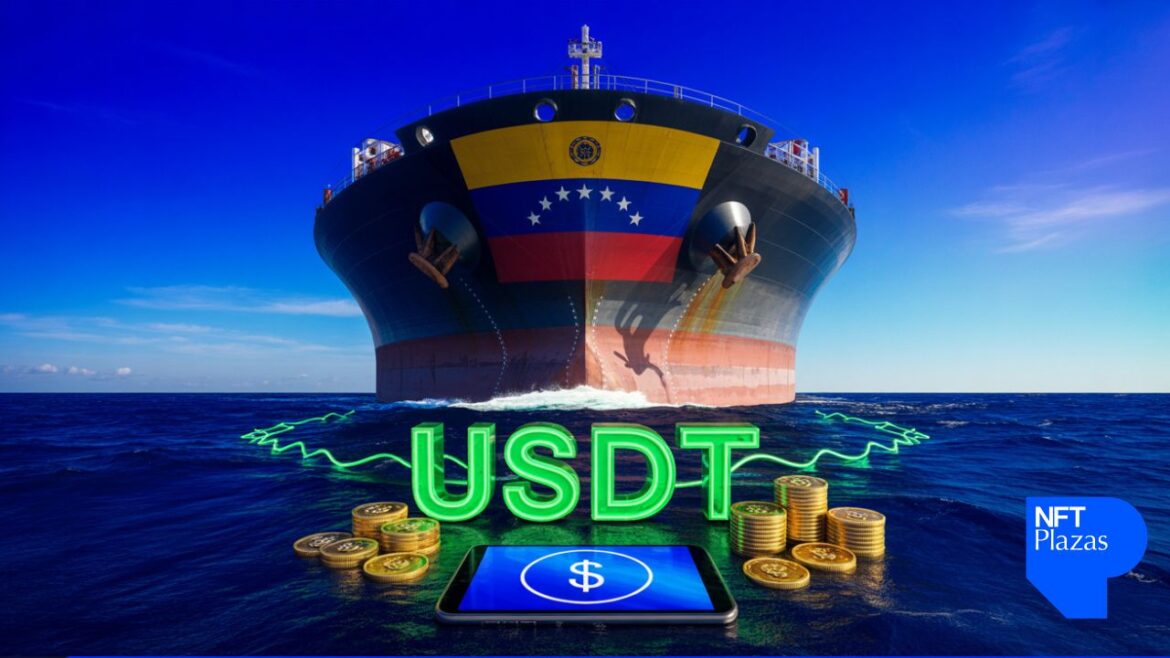
Global markets are digesting a wave of geopolitical shocks, from renewed conflict in Eastern Europe to rising tensions across Latin America. In this environment, Venezuela’s political rupture following the arrest of Nicolás Maduro is sending ripples far beyond Caracas. One of the clearest signals is not found in diplomacy or military headlines, but in payments. USDT is quietly strengthening its position as a core settlement tool in Venezuela’s oil trade.
Global Uncertainty Reshapes Energy Flows
The past weeks have underscored how fragile global energy logistics remain. Disruptions in shipping lanes, sanctions enforcement, and leadership changes often do not stop oil from moving, but they complicate how it gets paid for. Energy traders increasingly focus on settlement risk rather than supply risk.
Venezuela finds itself caught between overlapping strains. Long-standing sanctions have cut the country off from much of the global banking system, and the latest political turmoil has made counterparties even more cautious.
Traders say payments routed through traditional banks now face longer delays, as correspondent institutions tighten checks or step back altogether. In response, market participants are falling back on tools that work regardless of local institutions.
Why USDT Keeps Oil Deals Alive
Stablecoins are not new to Venezuela’s oil trade, but their role is expanding. USDT stands out because of its liquidity and acceptance. Traders describe it as “the only instrument everyone agrees on” when banks hesitate or freeze transfers.

The logic is simple. Oil cargoes still need payment. Refiners and middlemen want speed and predictability. USDT allows near-instant settlement, reduces exposure to blocked accounts, and avoids multi-day clearing delays. In volatile moments, those features matter more than ideology or innovation.
One trader involved in Latin American crude flows noted that stablecoins now function like an informal clearing system. They bridge gaps when formal rails fail. After Maduro’s arrest, that bridge has become more heavily used.
Learn more: Market Cap Analysis by NFTPlazas
Political Shock Accelerates A Quiet Shift
Maduro’s detention has not halted production overnight, but it has blurred authority. Questions over who signs contracts, who controls accounts, and which obligations remain valid have multiplied. In such conditions, counterparties look for settlement methods that sit outside domestic control.
USDT has become a practical alternative. It bypasses local banks and can be accessed through international exchanges and OTC desks. While some deals still require stablecoins to be converted into cash at a later stage, the first leg of settlement is increasingly taking place on-chain.
| Factor | Before arrest | After arrest |
| Bank transfers | Slow, restricted | More delays, higher risk |
| Sanctions exposure | High | Higher due to uncertainty |
| Stablecoin use | Common but selective | Expanding and normalized |
| Preferred asset | USD, euro | USDT dominates |
Oil settlements at a glance
This shift does not signal confidence in crypto markets. It reflects a lack of alternatives.
Risks Behind The Convenience
Analysts warn that reliance on USDT carries its own risks. Regulatory scrutiny remains a constant threat. Any change in stablecoin oversight or issuer policy could disrupt flows overnight. There is also concentration risk, since most settlements lean on a single asset.
Transparency remains a sticking point. Stablecoin settlements often leave fewer visible traces, which could complicate oversight for future governments and international counterparts. Even if a post-Maduro administration moves to restore conventional payment channels, shifting traders back may not be straightforward.
Many market participants view the current setup as a stopgap, but one that could outlive the crisis itself. Once a payment method proves fast and dependable, it tends to stick, particularly when it fills gaps that traditional systems have struggled to close.
Learn more the efficient of Binance Wallet in crypto adoption – NFTPlazas
What This Means Beyond Venezuela
The broader implication reaches beyond one country. USDT’s growing role in oil settlements highlights how digital dollars now serve as shock absorbers in global trade. They step in when politics disrupt finance.
For the crypto industry, this reinforces a familiar theme. Stablecoins gain relevance not during booms, but during stress. Their value lies in function, not narrative.
To sum up, Maduro’s arrest has reshaped Venezuela’s political landscape, but it has also sharpened an economic reality. As long as uncertainty clouds banks and contracts, USDT will remain central to how Venezuelan oil gets paid for. In times of upheaval, the most reliable systems are often the least visible.
